Case study
Notting Hill Genesis: Hands-on training in Service Design and Agile practices
“
The training delivered by Basis has empowered our teams at Notting Hill Genesis to design customer experiences that truly make a difference. We're now more creative, agile and structured, which will help us deliver effortless and impactful customer journeys. ”
Amjad (Khan), Director of Customer Experience, Notting Hill Genesis
The Challenge
Like many housing associations, Notting Hill Genesis has experienced a significant period of change following the pandemic as the needs and expectations of both residents and staff have evolved. In particular, the cost-of-living crisis has challenged housing associations to not only deliver greater value for money but to also do more to help residents through these difficult times.
Recently, Notting Hill Genesis launched their Better Together corporate strategy for 2023-2026 focussed on becoming a truly resident-centric organisation. As a housing association, they want to be able to better empathise with residents and see services from their point of view, manage estates in a holistic way that meets the needs of the local community, and make better decisions that achieve a greater return on investment.
As part of this strategy, Notting Hill Genesis set up a new customer journeys and insight function so that they can meet their strategic priorities and improve the resident experience from end-to-end.
For this reason, NHG asked us if we could design and deliver training to ensure the customer journeys and insight team are equipped with the practical skills and tools to consistently achieve customer-focussed change. Given our expertise in both Service Design and Agile ways of working, we were happy to help.
Designing the training
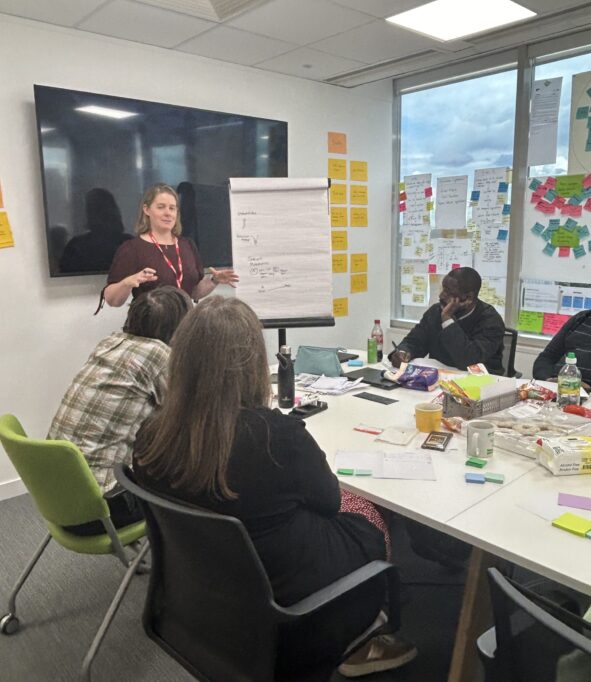
Like most of the work we do here at Basis, we knew that for the training to be effective, it needed to be experiential rather than theoretical.
In collaboration with the Head of Customer Journey and Insight, we identified three priority areas the team would like to focus on:
Instead of teaching various methods using made-up scenarios, we set up three project teams that would be doing real work on each of these priority areas.
To do this, we designed the training to follow the Design Council’s Double Diamond moving from discovering and defining the problem to developing and delivering solutions over the course of four training sessions.
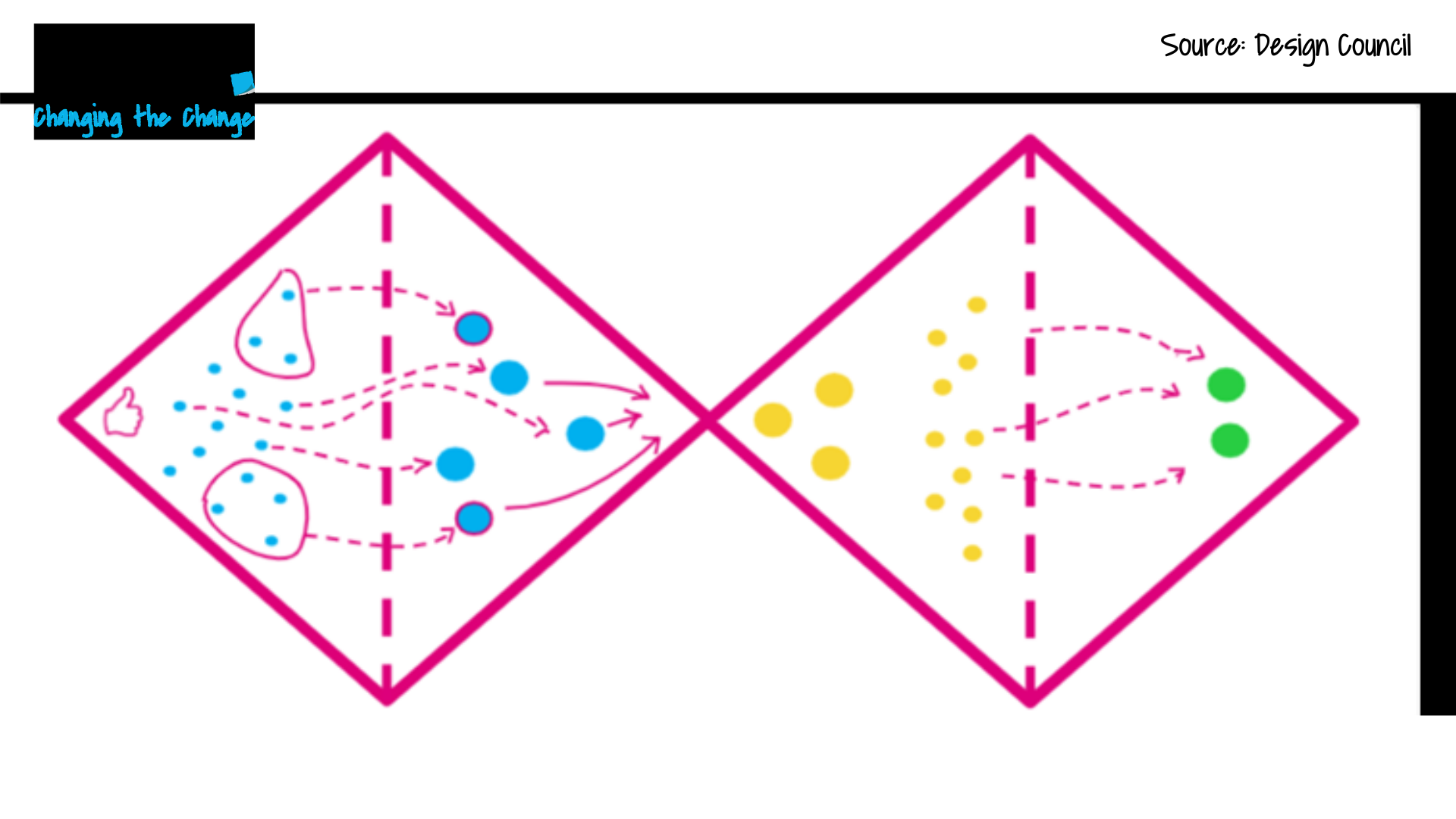
Here is what each session consisted of:
“Very engaging. Not being killed by PowerPoint is really nice and also having practical exercises. Working with colleagues on a live project has been a really good way to apply that learning quite quickly”
- Ollie Levy, Resident Involvement Manager
Doing the training
When it came to delivering this training, there were two things we needed in ample supply: Post-it notes and wall space.
To ensure the training was as hands-on as possible, we would give the teams just enough knowledge and understanding to have a go. For example, they had the opportunity to practise user interviews on each other with one person serving as the interviewer, another as the interviewee and an observer to give feedback.
This meant that during the training the teams developed real outputs such as interview guides, user personas, prototypes and agile project plans. Over the course of the training, teams gradually added their work to their respective project boards - large sections of wall which became increasingly plastered with Post-it notes.
In addition to producing real outputs during the training, we also asked the teams to do some homework between the sessions. Most notably, after Day 1, teams used their newfound skills in user research to conduct real interviews with residents that would inform the personas and journey maps developed on Day 2.
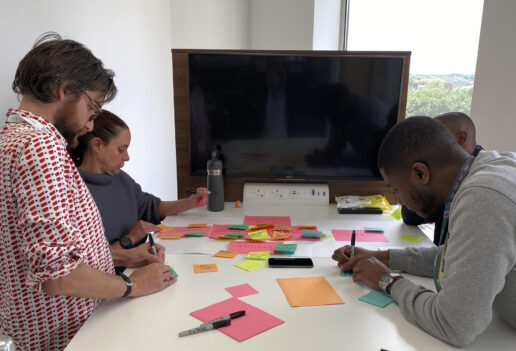
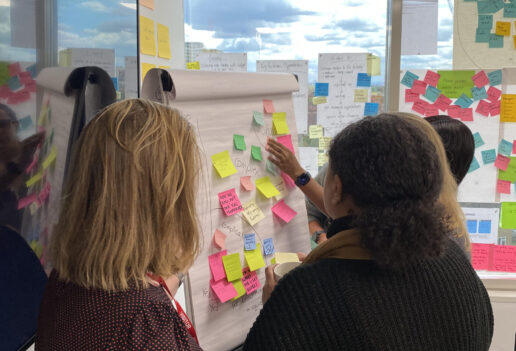
“It’s been designed in a way that’s really practical and hands-on so everything from how each session was run, learning some theory, going away and putting it into practice immediately on the day but then also between the different sessions across the weeks to reflect on the learning.”
- Susanna Harper, Head of Customer Journeys and Insight
Starting with the second training session, each morning began with a show and tell where teams shared insights on the progress they made with the rest of the group, focussing both on what surprised them and any challenges they faced.
By the end of the training, teams had complete project boards that told the narrative of their work from problem to solution. On the final day, the teams had the opportunity to present their boards to senior leadership, including the chief exec.
"I’ve already started thinking about some of the common issues or things we need to improve and it’s already had me thinking about the best ways to approach those problems and a clearer way forward."
- Charlene Grant, Customer Service Centre Operations Manager
The impact of the training
At the end of the final session, it was great to hear and feel the enthusiasm in the room to take each of the projects forward.
If anything, the biggest concern of the group was ensuring they would have enough time to dedicate to these initiatives amid the competing priorities of their day-to-day responsibilities.
Because the training centred around real projects, this meant that each of the teams had tangible prototypes to test and actual Agile project plans to execute against.
When we checked in with the team for their learning review a little over a month later, they said that working in an agile way had now become business as usual. Most notably, the team shared that the sprint cycle in particular worked well in helping them get stuff done. Specifically, they said agile helped increase the speed of their projects while working more collaboratively in a way that better utilises the many skill sets across the department.
In terms of service design, the team also reported that following the design process of going wide and narrowing down has been helpful in focusing on what matters most especially from a customer perspective. Additionally, the team said they are now having more active conversations around failure demand in the service. Instead of just focusing on what’s wrong, they are able to use design thinking tools to reframe problems in ways that help them identify opportunities where they can start to make meaningful change, quickly.
What they had to say...
You too can deliver faster outcomes with lasting results
Secure your place to become an Agile Master by the Public Service Transformation Academy. Or get in touch by emailing us on comms@basis.co.uk